


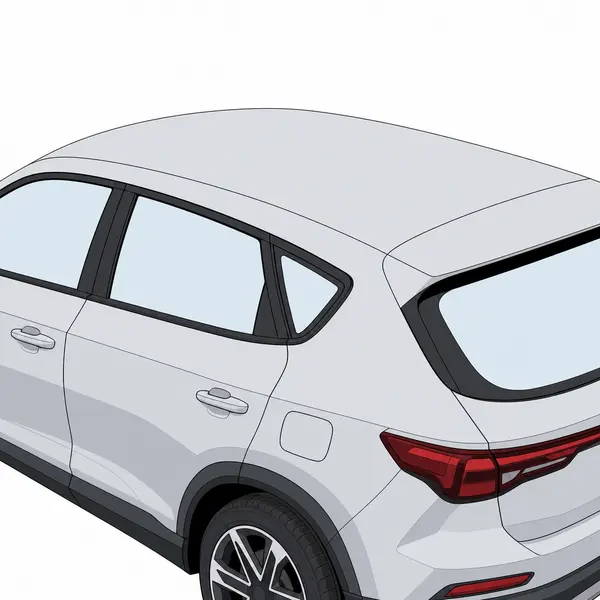
Normal or naked roof
A normal or naked roof has no visible rails running along the roof and no obvious permanent mounting points.
Depending on the vehicle, a suitable roof-bar system may use vehicle-specific feet and a fitting kit that clamps around the upper door frame.
A smooth-looking roof does not always mean there are no mounting points, however. Some vehicles have factory fixed points hidden underneath removable covers or trim.
So check carefully before selecting Normal / Naked Roof.
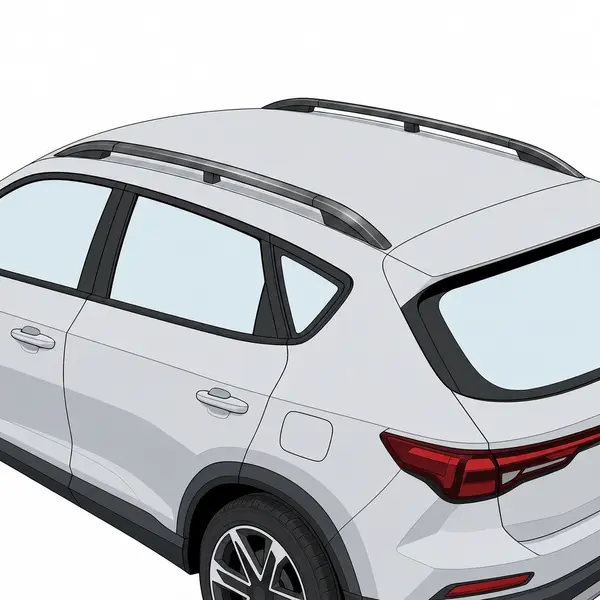
Raised roof rails
Raised rails run from front to back along both sides of the roof.
The easiest way to identify them is the visible gap between the rail and the vehicle roof.
You should normally be able to get your fingers or hand underneath the rail.
Roof-bars designed for raised rails attach around or onto these existing rails. The exact bar and foot system still needs to be suitable for the vehicle and rail design.
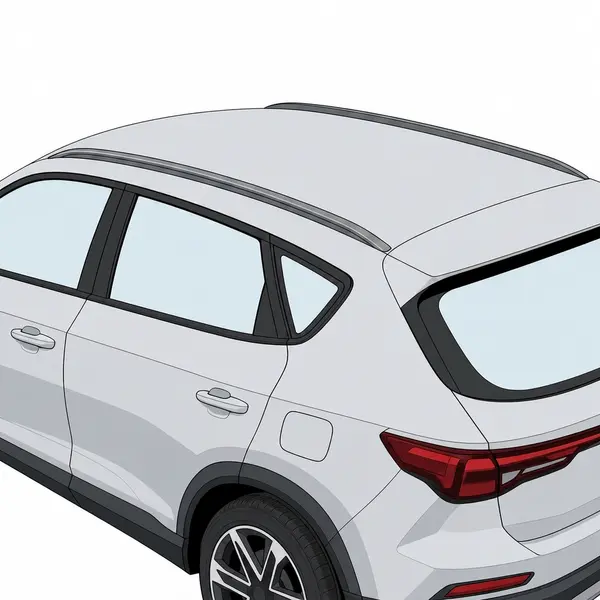
Flush roof rails
Flush rails also run from front to back, but they sit directly against the vehicle roof.
Unlike raised rails, there is no usable gap underneath the rail, so you cannot wrap your hand around it.
Flush rails usually require a fitting system designed specifically for that rail or vehicle.
This distinction matters because roof bars designed for raised rails should not simply be assumed to fit flush rails.
The visible-gap test is one of the easiest ways to tell the two apart.
Factory fixed points
Some vehicles have dedicated mounting points built into the roof.
These are often hidden beneath:
- small plastic covers;
- removable flaps;
- sections of roof trim;
- a strip running along the roof.
When the cover is removed, there may be a threaded or shaped mounting point underneath for a vehicle-specific roof-bar system.
Fixed points can therefore be easy to mistake for a normal roof if the covers are not obvious.
The roof-bar fitting system normally attaches directly to these approved mounting positions.
What if my roof has rails and fixed points?
Some newer vehicles have flush rails with fixed mounting points built into them.
Visually, these still appear to be flush rails, but the roof-bar system may attach to specific points within the rail rather than simply clamping around it.
If your rails contain removable covers, holes or clearly defined mounting positions, check the vehicle and roof-bar manufacturer’s fitting information before choosing equipment. This mixed arrangement is increasingly seen on modern vehicles.
What about panoramic or glass roofs?
A panoramic roof does not necessarily determine the roof type.
A vehicle with a panoramic roof might still have:
- raised rails;
- flush rails;
- fixed points;
- another manufacturer-specific mounting system.
Do not assume that bars can or cannot be fitted simply because the vehicle has glass in the roof.
Check the manufacturer-approved roof-bar system for the exact vehicle, as there may also be restrictions on opening the panoramic roof while bars or equipment are fitted.
Less common roof types
Most cars fall into one of the four main categories above, but some vehicles use less common systems.
These can include:
T-profile or roof channels
A channel or groove built into the roof which accepts a suitable mounting system.
Factory crossbars
Some vehicles have crossbars already integrated into the roof-rail system.
Manufacturer-specific systems
Certain vehicles use unique mounting designs that do not fit neatly into the usual categories.
If the roof does not look like one of the four common examples, check the vehicle manufacturer’s information before choosing bars. Roof-bars.co.uk also identifies T-profile channels, factory-installed crossbars and flush rails with fixed points as examples of less common arrangements.
Why does roof type matter when hiring roof bars?
The roof type determines which roof-bar system can be fitted to the vehicle.
A complete setup may involve different:
- feet;
- fitting kits;
- crossbars;
- mounting hardware.
So two vehicles that look very similar may require completely different equipment.
When hiring roof bars through RentMyRoofbox, make sure the listing is compatible with your exact vehicle and roof type, not simply your vehicle model.
For a more detailed explanation of how bars, feet and fitting kits work together, see our Roof Bar Compatibility Explained guide.
Still not sure what roof type you have?
If you are unsure:
- Look along both sides of the roof for rails.
- Check whether there is a gap underneath those rails.
- Look for small removable covers or strips hiding fixed mounting points.
- Check the owner’s manual or official vehicle information.
- Compare your vehicle with the fitting instructions for the roof-bar system you intend to use.
If there is any doubt, confirm the exact roof type before booking or fitting equipment.
Next step: find the right roof bars
Once you know your roof type, the next step is finding a roof-bar system designed for your exact vehicle.
See our Roof Bar Compatibility Explained: Bars, Feet and Fitting Kits guide to understand how the different components work together.
If you are looking to hire rather than buy, browse roof bars available to rent through RentMyRoofbox and check the vehicle and roof-type compatibility shown on each listing.